If you are searching "what is the average monthly cost for memory care," you are probably comparing options for a parent with Alzheimer's or dementia and trying to understand what you are paying for and why the numbers vary so much. There is no single average that fits every family, because the monthly cost is driven by what kind of care your parent needs, what kind of building provides it, and what is included in the rate. This guide breaks down the factors that drive memory care cost in the Puyallup area, what is typically included, and how to compare value — without a single dollar figure, because rates change and the right question is what fits your parent, not what an average says.
Why there is no single "average" monthly cost
The number families see online for "average monthly cost of memory care" usually comes from national surveys of large purpose-built memory care facilities. Those surveys do not reflect what a family actually pays in Pierce County for a six-bed adult family home, and they do not account for the fact that the same diagnosis can require very different levels of care. A resident with early-stage dementia who needs reminders and supervision costs less to care for than a resident with advanced Alzheimer's who needs full assistance with bathing, dressing, and eating — and the monthly rate reflects that difference. That is why the honest answer to "what is the average monthly cost" is: it depends, and the right way to compare is to look at what drives the cost.
The five factors that drive the monthly cost of memory care
1. Level of care the resident needs
Memory care is not one service. It is a spectrum that runs from a resident who needs occasional reminders to take medication and stay safe, up to a resident who needs full hands-on assistance with every activity of daily living. including bathing, dressing, eating, toileting, and transferring from bed to chair. The more hands-on care a resident needs, the more staff time the home must pay for, and the higher the monthly rate. A DSHS assessment or a facility's own intake evaluation determines where on that spectrum your parent falls, and the rate is set accordingly.
2. Facility type — adult family home vs. memory care facility vs. nursing home
This is the single biggest driver of cost, and it is the one families most often misunderstand.
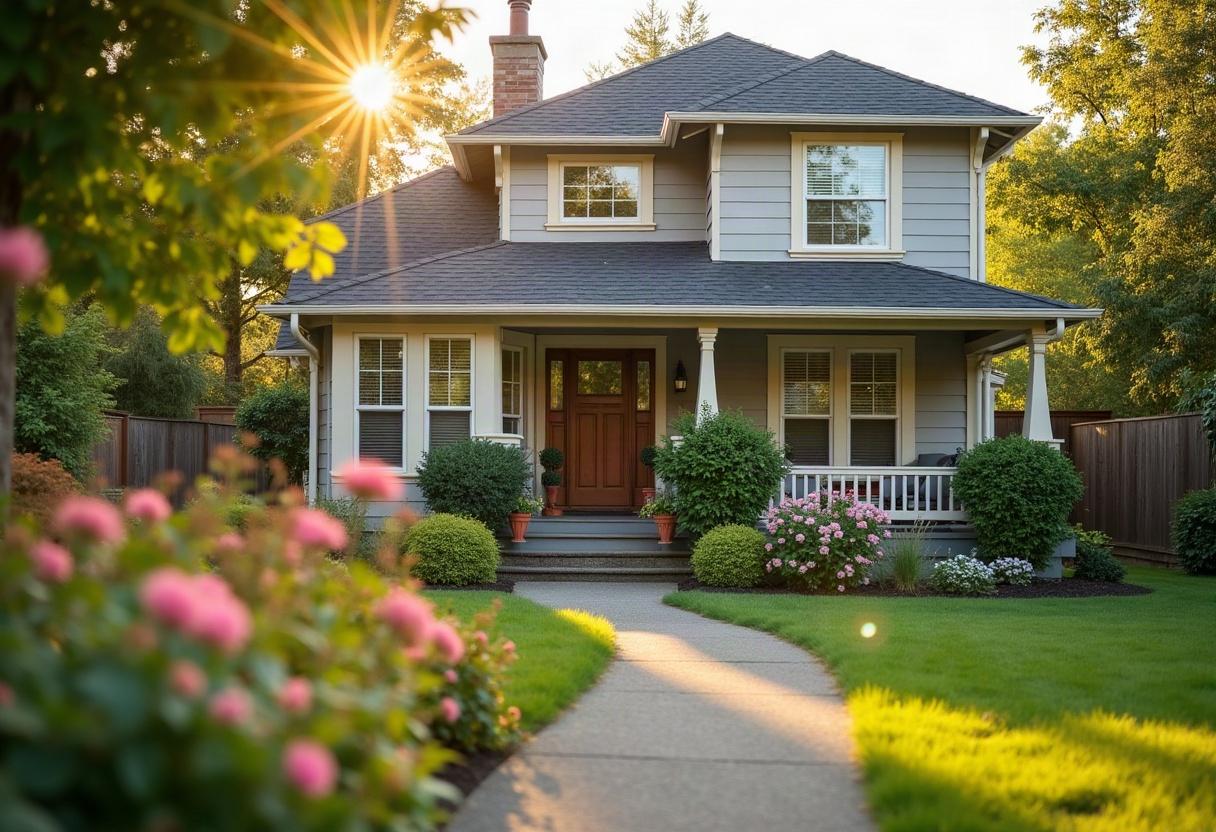
- Adult family home. A licensed residential house, typically six beds, where care is delivered in a normal home setting by a small staff. often certified nursing assistants. Overhead is low — it is a house, not a building — and the staff-to-resident ratio is favorable. Puyallup Bliss AFH is a six-bed adult family home licensed by Washington DSHS (license 758137) with a 1:1.5 staff-to-resident ratio. This is generally the most cost-effective residential option for memory care.
- Memory care facility. A larger, purpose-built community — often 30 to 100 residents — with secured entries, memory cueing corridors, and specialized dementia design. The building, the specialized staff, and the security features all add overhead that a six-bed home does not carry. The monthly rate reflects that overhead.
- Nursing home. A skilled nursing facility with 24-hour licensed nursing staff. This is the most intensive and typically the most expensive option, appropriate when a resident needs medical care that an adult family home or memory care facility cannot provide.
The key point: the same parent, with the same diagnosis, can cost different amounts depending on which of the three building types you choose. The level of dementia design and the staff credentials are what you are paying for when you move up from an adult family home to a purpose-built memory care facility to a nursing home.
3. Room choice — private versus semi-private
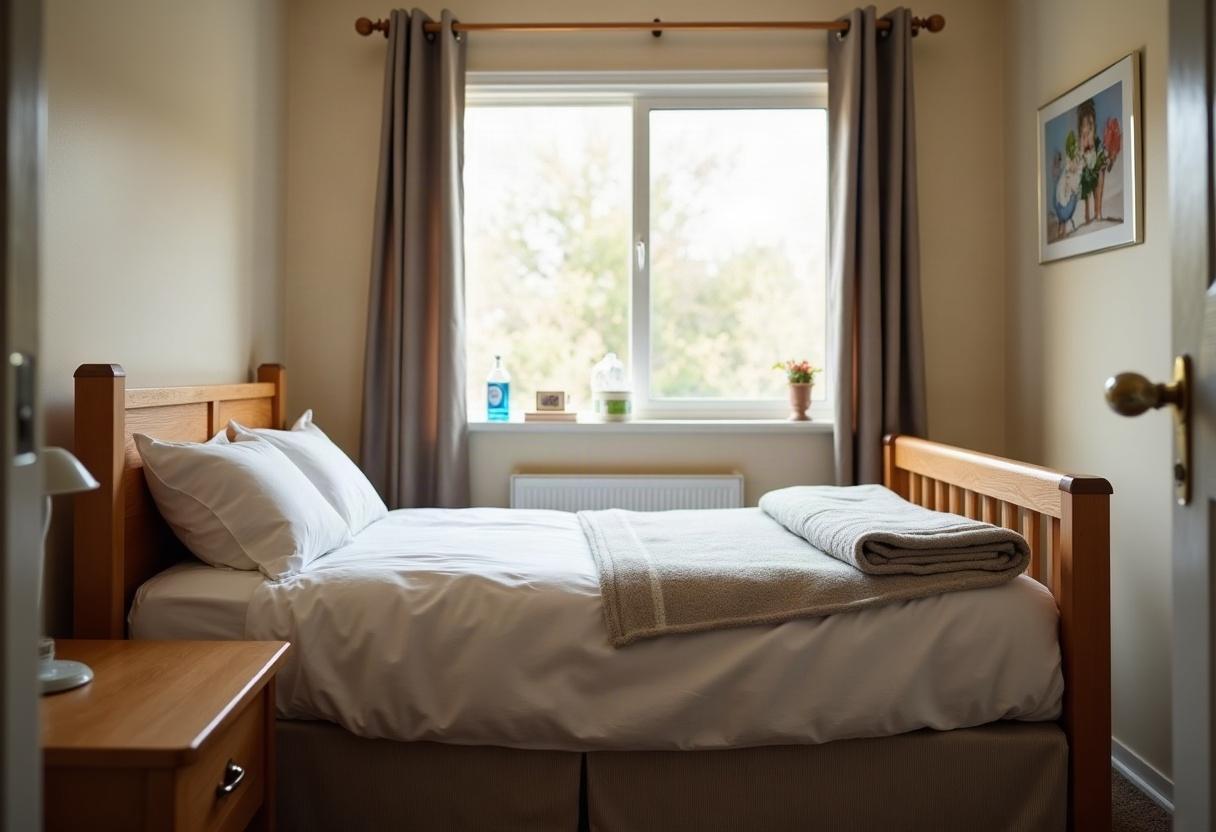
A private room is a single-occupancy room. A semi-private or shared room is two residents in one room. divided by a curtain or partial wall. A private room costs more because one resident occupies the space that could hold two. Some families choose a shared room to reduce the monthly cost; others choose a private room for privacy and quiet, which matters for a resident with dementia who is easily startled or confused by a roommate. Both options exist in most adult family homes and memory care facilities.
4. Location within Pierce County
Cost varies by location, even within a single county. Areas with higher real estate values and higher staffing costs carry higher monthly rates. Puyallup sits in central Pierce County, close to Tacoma and the major hospital systems (MultiCare Good Samaritan, Virginia Mason Franciscan Health), which affects both staffing costs and how easily families can visit. Puyallup Bliss AFH is located at 604 22nd Ave Ct SE, Puyallup, WA 98372, close to downtown Puyallup and the Puyallup fairgrounds.
5. Staff-to-resident ratio and staff credentials
A facility with more staff per resident costs more to run, and that cost is reflected in the monthly rate. A six-bed adult family home with a 1:1.5 ratio (like Puyallup Bliss AFH) can give more individual attention than a large facility where one caregiver covers twenty residents. All caregivers at Puyallup Bliss AFH are certified nursing assistants, and the home is bilingual (English and Spanish), which matters for families whose parent is more comfortable in Spanish. When you compare rates, always ask what the staff-to-resident ratio is and what credentials the caregivers hold — a low rate with a high ratio is not the same value as a higher rate with a low ratio.
What is typically included in the monthly rate
When you compare facilities, ask what the monthly rate actually covers. A rate that looks lower can be higher once you add in items that another facility includes by default. For memory care in a licensed adult family home, the monthly rate typically includes:
- 24-hour supervision and personal care assistance (bathing, dressing, grooming, toileting, eating, transferring)
- Three meals a day plus snacks, prepared for the resident's dietary needs
- Medication management — reminders, assistance, or administration, depending on the resident's needs
- Housekeeping and laundry
- Activities and social engagement appropriate for the resident's cognitive level
- Memory care programming — routines, cues, and a calm environment that reduce agitation and confusion
- Utilities, cable, and basic supplies
Items that are sometimes billed separately and sometimes included: incontinence supplies, transportation to medical appointments, specialized dementia therapy, and salon services. Ask for an itemized list before you compare rates.
How to compare value, not just price
The monthly rate is one number. Value is what you get for that number. When you are calling facilities in the Puyallup area, ask each one the same set of questions so you can compare apples to apples:
- What is the staff-to-resident ratio on the day shift and the night shift?
- What credentials do the caregivers hold (CNA, licensed nurse, none)?
- Is the home licensed by Washington DSHS, and what is the license number?
- What is included in the monthly rate, and what is billed separately?
- How many residents live in the home, and how many are there per caregiver?
- What is the room configuration — private, semi-private, or both?
A six-bed home that includes medication management, all meals, and 24-hour supervision at a single rate is a different value than a larger facility that charges separately for each of those. Call (253) 455-5057 for current rates and availability at Puyallup Bliss AFH, and ask those questions when you call.
Payment options in Washington State
Families paying for memory care in Washington generally use one or a combination of the following:
- Private pay. The family pays the monthly rate directly from savings, income, or the sale of a home. This is the simplest path and the one most families start with.
- Washington Medicaid (Apple Health, administered by DSHS). For residents who meet medical and financial eligibility, Medicaid can pay for long-term care in a licensed adult family home. A DSHS caseworker evaluates medical need and financial eligibility. In Pierce County, the Area Agency on Aging can help with the application, A Puyallup adult family home like Puyallup Bliss AFH (DSHS license 758137) participates in this program.
- Veterans benefits. Veterans and surviving spouses may qualify for the Aid and Attendance benefit, a monthly pension supplement that can be used toward long-term care, Eligibility depends on wartime service, medical need, and financial need, A Veterans Service Officer can help file the claim.
- Long-term care insurance. If your parent bought a long-term care policy, it may pay a daily or monthly benefit toward memory care, Policies vary widely — check the policy for what it covers, the elimination period, and the benefit amount.
Most families use a combination: private pay first, then Medicaid once savings are spent down, and any veteran or insurance benefit that applies. The right mix depends on your parent's finances and the benefits they have earned. Learn more about how Medicare and Medicaid interact with memory care, or explore memory care in Puyallup more generally.
The bottom line
The question "what is the average monthly cost for memory care" has an honest answer: there is no single average, because the cost depends on what your parent needs and what kind of building provides it. The right way to compare is to understand the five factors — level of care, facility type, room choice, location, and staff ratio — confirm what is included in the rate, and match the payment option to your family's situation. The next step is to call a few facilities with the same questions and compare the answers. To see the rates and availability at a six-bed licensed adult family home in Puyallup, call (253) 455-5057 or visit our facility and ask what is included in the monthly rate.